
Introduction to Allergy Testing in Houston
Allergies can affect people of all ages and interfere with everyday activities, sleep, work, and overall comfort. Symptoms such as sneezing, nasal congestion, itchy eyes, skin rashes, and breathing difficulties may occur after exposure to certain substances. In Houston, changing weather conditions, humidity, indoor allergens, and seasonal pollen can contribute to allergy concerns for some residents.
Allergy testing in Houston helps healthcare professionals investigate the substances that may be causing these symptoms. Identifying potential allergy triggers can make it easier to develop a suitable treatment and prevention plan. Whether you experience seasonal allergies, persistent indoor symptoms, or suspected food-related reactions, a professional evaluation can help you understand your condition and explore appropriate care options.
What Is Allergy Testing?
Allergy testing is a diagnostic process used to evaluate whether the immune system reacts to specific substances known as allergens. These substances may include pollen, dust mites, mold, animal dander, certain foods, and insect venom.
When someone with an allergy encounters a relevant allergen, the immune system may produce an exaggerated response. Depending on the type of allergy, symptoms can include sneezing, itching, swelling, hives, digestive discomfort, or respiratory problems.
Healthcare professionals commonly use skin tests and blood tests to investigate suspected allergies. The appropriate method depends on the patient’s symptoms, medical history, medications, and possible exposure to allergens.
Testing results should always be interpreted alongside clinical symptoms. A positive test can indicate sensitization to a substance, but it does not necessarily prove that the substance causes symptoms during everyday exposure.
Common Types of Allergy Testing in Houston
1. Skin Prick Allergy Testing
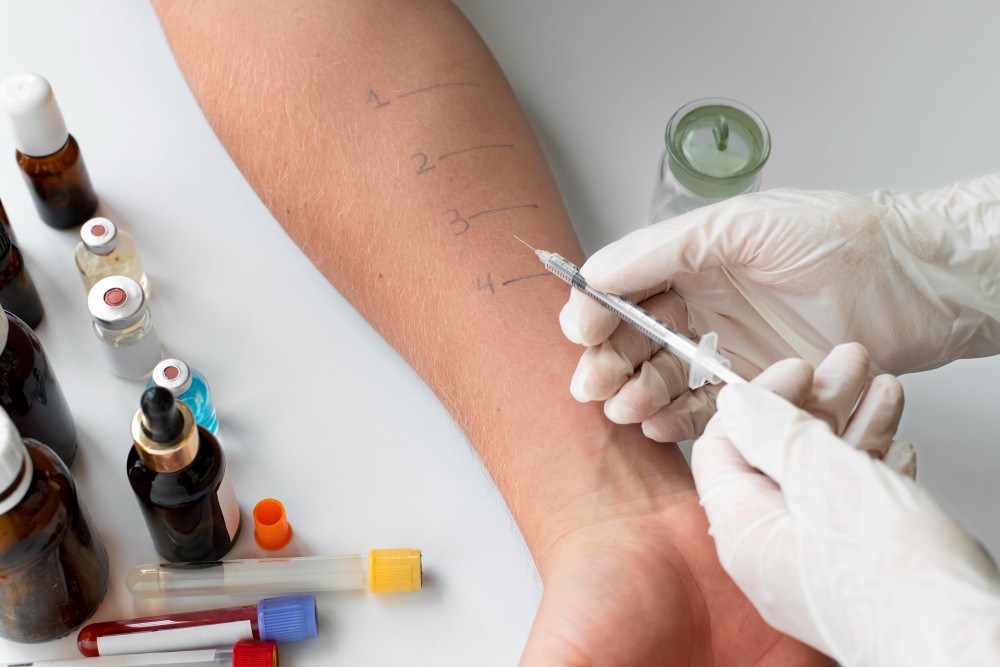
Skin prick testing is a common method for evaluating suspected environmental and selected other allergies. During the procedure, a healthcare professional places small drops of allergen extracts on the skin, usually on the forearm or back, and gently pricks the surface.
The provider examines the skin for reactions, typically after approximately 15–20 minutes. A raised, itchy bump may indicate sensitization to the tested allergen.
This method can help investigate allergies to pollen, dust mites, mold, animal dander, and certain other substances.
2. Allergy Blood Testing
Blood testing measures allergen-specific immunoglobulin E (IgE) antibodies. A healthcare professional may recommend this method when skin testing is unsuitable or when particular medications or skin conditions could interfere with skin test results.
Blood tests can help investigate suspected allergies, but the findings must be interpreted carefully. They do not independently predict the severity of a future allergic reaction.
3. Food Allergy Testing
Food allergy evaluations may be recommended when symptoms occur after eating particular foods. Depending on the clinical history, testing may include targeted skin prick tests, specific IgE blood tests, and, when appropriate, a medically supervised oral food challenge.
Food intolerance and food allergy are different conditions. Broad food sensitivity panels are not a reliable way to diagnose food allergies, and patients should avoid eliminating multiple foods without appropriate medical guidance.
4. Environmental Allergy Testing
Environmental allergy testing evaluates potential reactions to substances found indoors and outdoors. Common examples include tree pollen, grass pollen, weeds, dust mites, mold, and pet dander.
Identifying relevant environmental triggers may help patients make practical changes to reduce exposure and manage symptoms.
Common Allergy Symptoms to Watch For
Allergy symptoms can vary depending on the allergen, the type of reaction, and the individual’s sensitivity. Common symptoms include:
- Frequent sneezing or a runny nose.
- Nasal congestion and postnasal drip.
- Itchy, watery, or red eyes.
- Skin itching, hives, or recurring rashes.
- Coughing or wheezing associated with allergic exposure.
- Symptoms that repeatedly occur during particular seasons or after contact with specific substances.
If these symptoms persist, return frequently, or interfere with daily activities, consider discussing them with a healthcare professional.
Difficulty breathing, swelling of the tongue or throat, fainting, or signs of a severe allergic reaction require emergency medical attention.
Why Allergy Testing Matters in Houston
Houston’s environment can expose residents to a variety of potential allergens. Seasonal pollen, indoor dust mites, and mold may contribute to symptoms in susceptible individuals. Warm, humid conditions can also support indoor mold growth when moisture is present.
However, not every case of congestion, coughing, or itchy skin is caused by an allergy. Infections, irritants, asthma, and other medical conditions can produce similar symptoms.
Professional allergy testing can help clarify the possible causes of recurring symptoms. When test results match a patient’s history, they may support more targeted recommendations for allergen avoidance, medications, and additional specialist care.
For people experiencing symptoms throughout the year, identifying indoor allergens may be especially useful. Those whose symptoms worsen during particular seasons may benefit from an evaluation of relevant outdoor allergens.
What to Expect During an Allergy Testing Appointment
Understanding the process can help you prepare for an appointment.
Step 1: Medical consultation. The healthcare professional reviews your symptoms, medical history, current medications, and suspected allergy triggers.
Step 2: Choosing the appropriate test. Based on your history, the provider determines whether skin testing, blood testing, or another diagnostic approach is suitable.
Step 3: Completing the test. The selected procedure is performed according to the provider’s instructions. Skin prick tests typically produce results within minutes, while blood test results may take longer.
Step 4: Reviewing the results. The provider explains the findings and considers how they relate to your symptoms and possible allergen exposure.
Step 5: Developing a care plan. Recommendations may include reducing exposure, using appropriate medication, monitoring symptoms, or considering referral for specialist treatment.
Before your visit, ask whether any medication adjustments are necessary. Antihistamines can interfere with some skin tests, but you should never stop prescribed medication without guidance from your healthcare professional.
How to Manage Allergies After Testing
Once potential triggers have been identified, the next step is to create a practical management plan.
Depending on your diagnosis, your healthcare professional may recommend reducing exposure to specific allergens, keeping indoor spaces clean, addressing moisture problems, or monitoring pollen levels during relevant seasons.
Medications such as antihistamines or nasal corticosteroids may help manage certain allergy symptoms. The appropriate option depends on your age, medical history, symptoms, and other medications.
Some patients with confirmed allergies may be candidates for allergen immunotherapy, which can involve allergy shots or certain under-the-tongue treatments. These therapies require professional assessment and are not appropriate for every allergy.
Regular follow-up appointments can help evaluate symptom control and determine whether your management plan needs adjustment.
Choosing an Allergy Testing Clinic in Houston
When searching for allergy testing in Houston, consider the provider’s qualifications, available testing methods, experience with allergic conditions, and approach to explaining results.
Ask whether the clinic offers skin prick testing or allergy blood testing, which allergens can be evaluated, and whether a referral is required. You may also want to confirm appointment availability, insurance acceptance, testing costs, and follow-up care options.
A qualified healthcare professional should select tests based on your symptoms rather than recommending unnecessary broad testing. This helps ensure that the results are meaningful and relevant to your healthcare needs.
If a general healthcare clinic does not provide allergy testing directly, ask whether it can refer you to an allergy specialist.
Conclusion
Allergy testing in Houston can help investigate recurring sneezing, congestion, itchy eyes, skin reactions, and other symptoms that may be related to allergies. Skin prick tests and blood tests can provide useful information when selected and interpreted appropriately.
Identifying relevant allergens may help you make informed decisions about exposure reduction, medication, and further treatment. If allergies are affecting your daily life, schedule a consultation with a qualified healthcare professional to discuss your symptoms and determine which testing options are appropriate for you.
Frequently Asked Questions (FAQs)
1. Where can I get allergy testing in Houston?
You can contact an allergist or a healthcare clinic that offers allergy evaluations in Houston. Confirm which testing methods are available and whether you need a referral before scheduling an appointment.
2. How much does allergy testing cost in Houston?
The cost varies depending on the type and number of tests, the provider, and your insurance coverage. Contact the clinic and your insurance company for an estimate before your appointment.
3. Is allergy testing painful?
Skin prick testing usually causes mild, temporary discomfort or itching. Blood testing involves a standard blood draw, which may cause brief discomfort.
4. How long does allergy testing take?
Skin prick test reactions are commonly assessed after approximately 15–20 minutes. The entire appointment may take longer because of consultation and preparation. Blood test results generally take longer to become available.
5. Can allergy testing identify seasonal allergies?
Yes. When clinically appropriate, testing can help identify sensitization to pollen from trees, grasses, and weeds. The results should be compared with your symptoms and seasonal exposure patterns.
Are recurring allergy symptoms affecting your comfort, sleep, or everyday routine? Take the next step toward understanding your symptoms with professional allergy testing in Houston.
Schedule an evaluation with a qualified healthcare provider to discuss your concerns, explore suitable testing options, and develop a personalized plan for managing potential allergy triggers.
Visit a https://scchouston.co/ qualified healthcare provider in Houston to discuss your allergy symptoms and learn whether allergy testing is appropriate for your needs.
Contact your preferred Houston clinic to ask about allergy testing services, appointment availability, preparation instructions, and insurance coverage.
Book Your Allergy Consultation: Schedule an appointment (281) 741-3204 to discuss recurring symptoms and explore appropriate diagnostic options.
Find Your Allergy Triggers: Learn more about possible environmental and seasonal allergens with a personalized medical evaluation.
Take the First Step Toward Allergy Management: Speak with a healthcare professional about understanding your symptoms and finding suitable ways to manage them.